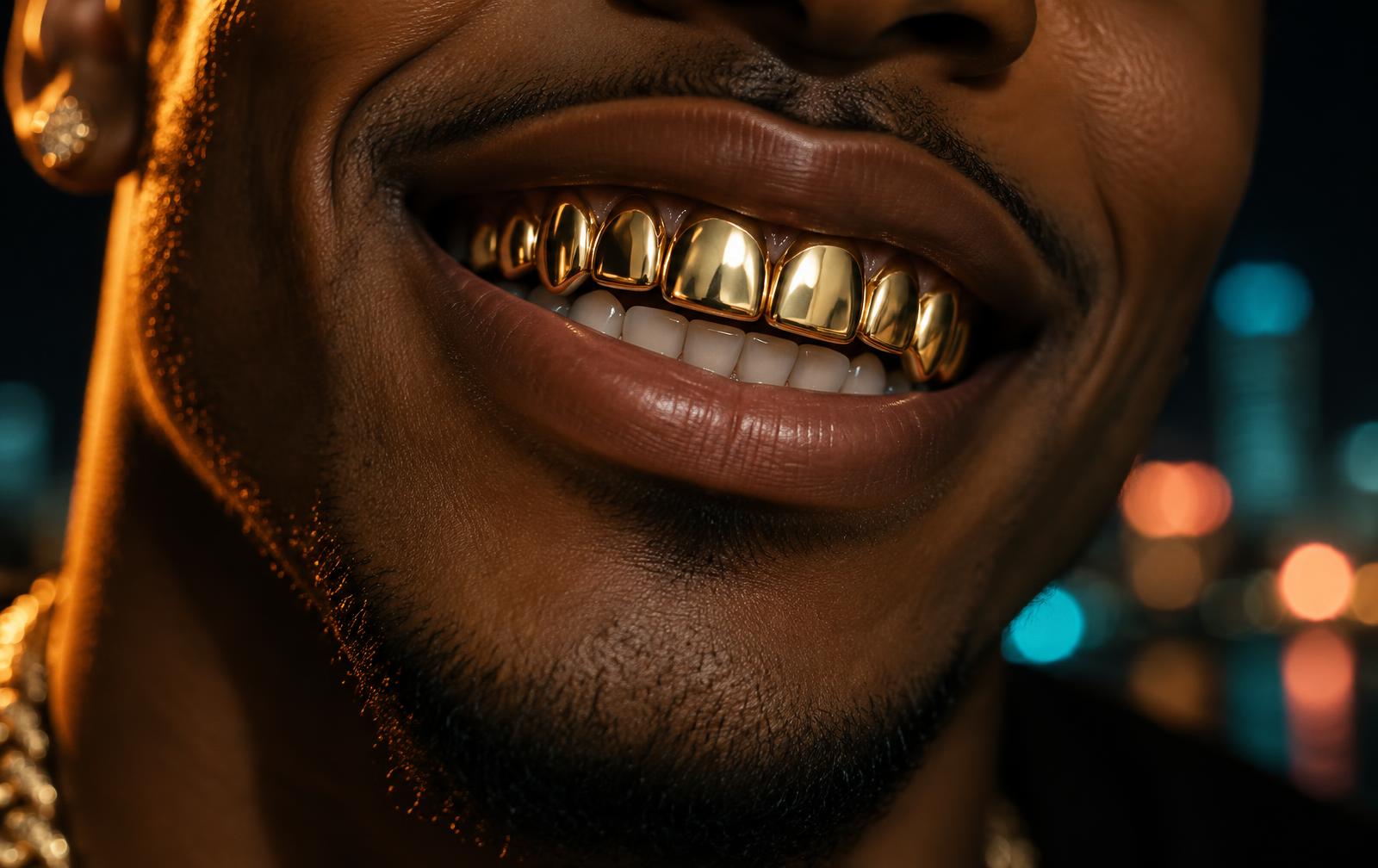
Before hip-hop
Gold teeth have a long history across the Caribbean and the American South, often as dental work that doubled as a status symbol. Miami's Caribbean communities — Haitian, Jamaican, Bahamian, Cuban — carried that tradition into the city long before anyone called them grillz.
The bass years
In the 1980s and '90s, Miami bass gave the city its own sound — fast, loud and built for car systems and block parties. Gold fronts showed up in the clubs and at the car shows, part of a local flash that matched the music.
Southern rap goes national
In the 2000s, Houston, Atlanta and New Orleans made grillz a national hip-hop symbol, and Miami was right there. Artists from Liberty City, Carol City and Opa-locka put the 305 on the map, and gold and iced smiles became part of how Miami rap looked on camera.
Today Rolling Loud, held at Hard Rock Stadium in Miami Gardens, draws fans from around the world, and every year the festival week brings a wave of grillz orders.
What it means now
Grillz in Miami cross every line now — artists, athletes, students, professionals on the weekend. The best pieces still carry the original idea: something personal, molded to you, that says where you are from. That is what we build.